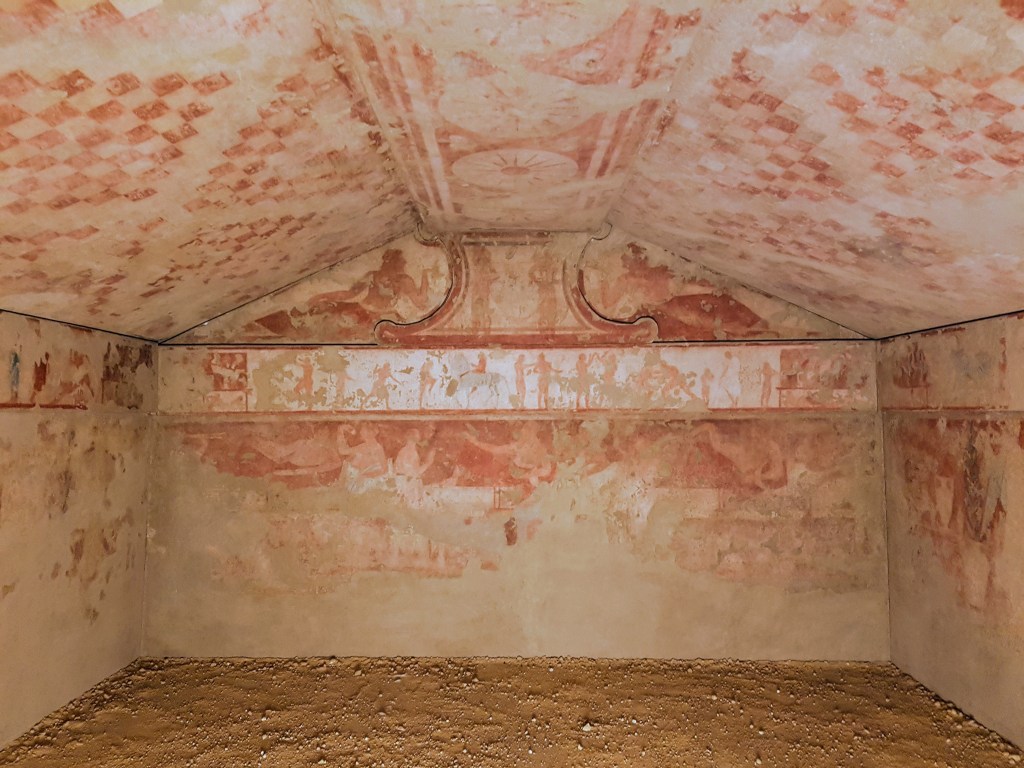
Notable because of its depiction of funerary games. See wrestlers and consider later Roman gladiatorial games.
Superintendent’s site notes:
Dating: first decades of the 5th century BC
Discovered in 1827
Paintings were detached in 1949.
The first description and graphic reproduction of the paintings owns to Baron Otto Magnus von Stackelberg. Since decorations are very faded, graphic reproduction made immediately after their discovery in XIX century is fundamental for their appreciation. The artist seems strongly influenced by contemporary Greek painting. The middle timber, its bracket and the cornice at the top of the walls are embossed. On the fronton of the rear wall there are two recumbent men as banqueters on either hand of a console supporting the middle timber where a krater is represented. It was the vessel where wine was blended with spices or honey because it was never drunk neat. The funeral games in honour of the deceased are painted on the cornice: boxing matches, contests of pole-vaulting, wrestling, discus, armed dancing and chariot racing, attended by a large public on the tribunes, represented in the corners of side and rear walls. Banquet scenes are painted on the walls, symbolizing the commissioner’s aristocracy: three male couples of commensals are served by naked attendants and elivened by music and dancing. The female double flute player with a typical Etruscan headdress (“tutulus”) is notably graceful.
 Cameron Goes to Italy
Leave a comment